
Insights For Policyholders
Straight answers about property insurance claims in New York, New Jersey, and Indiana.
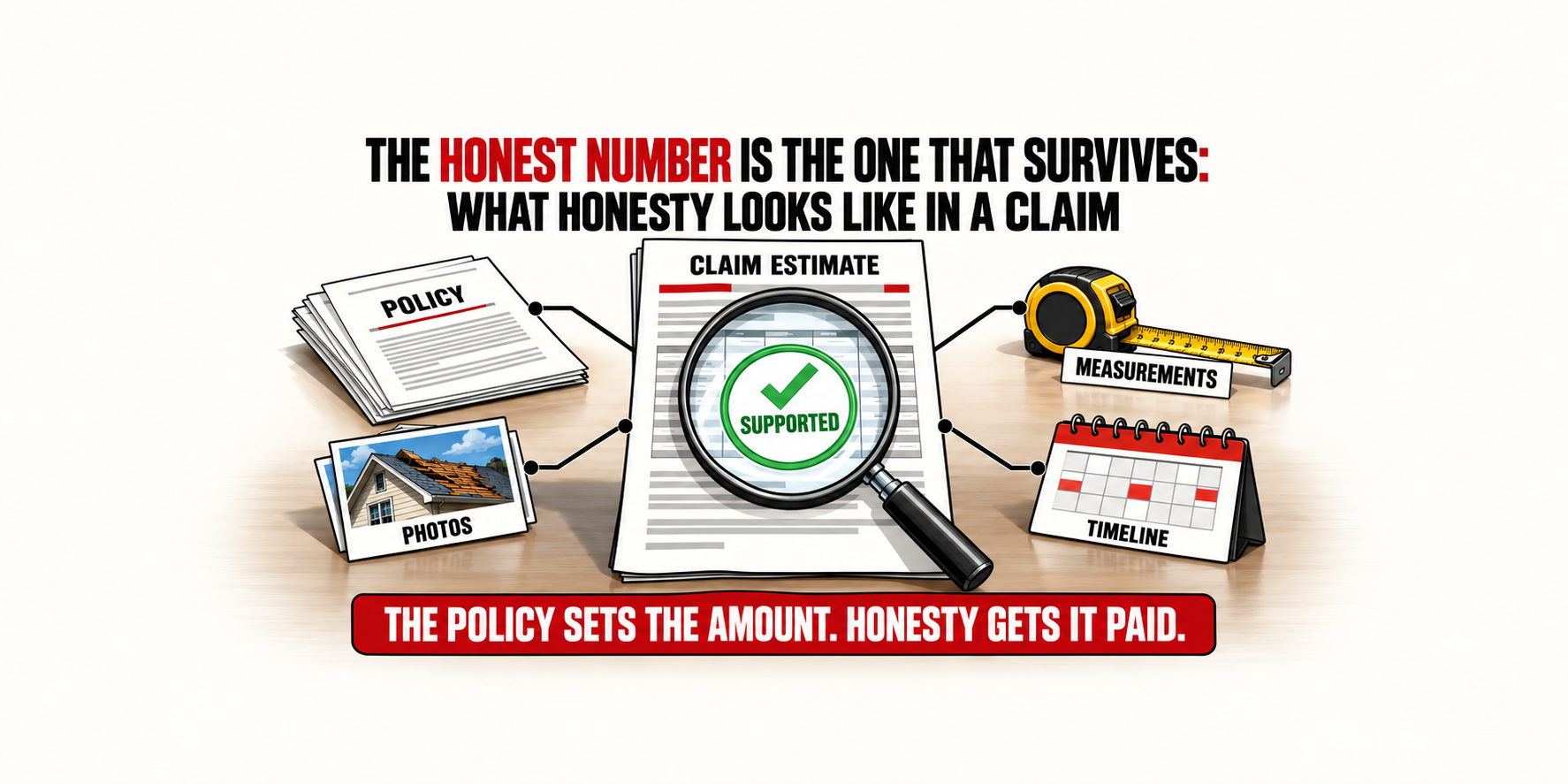
The Honest Number Is the One That Survives: What Honesty Looks Like in a Claim
In a property claim, honesty isn't just a virtue. It's the reason a number survives review. Here is what honesty looks like in practice: how to handle prior damage, the weak parts of a claim, the timeline, and the client who shouldn't hire anyone.
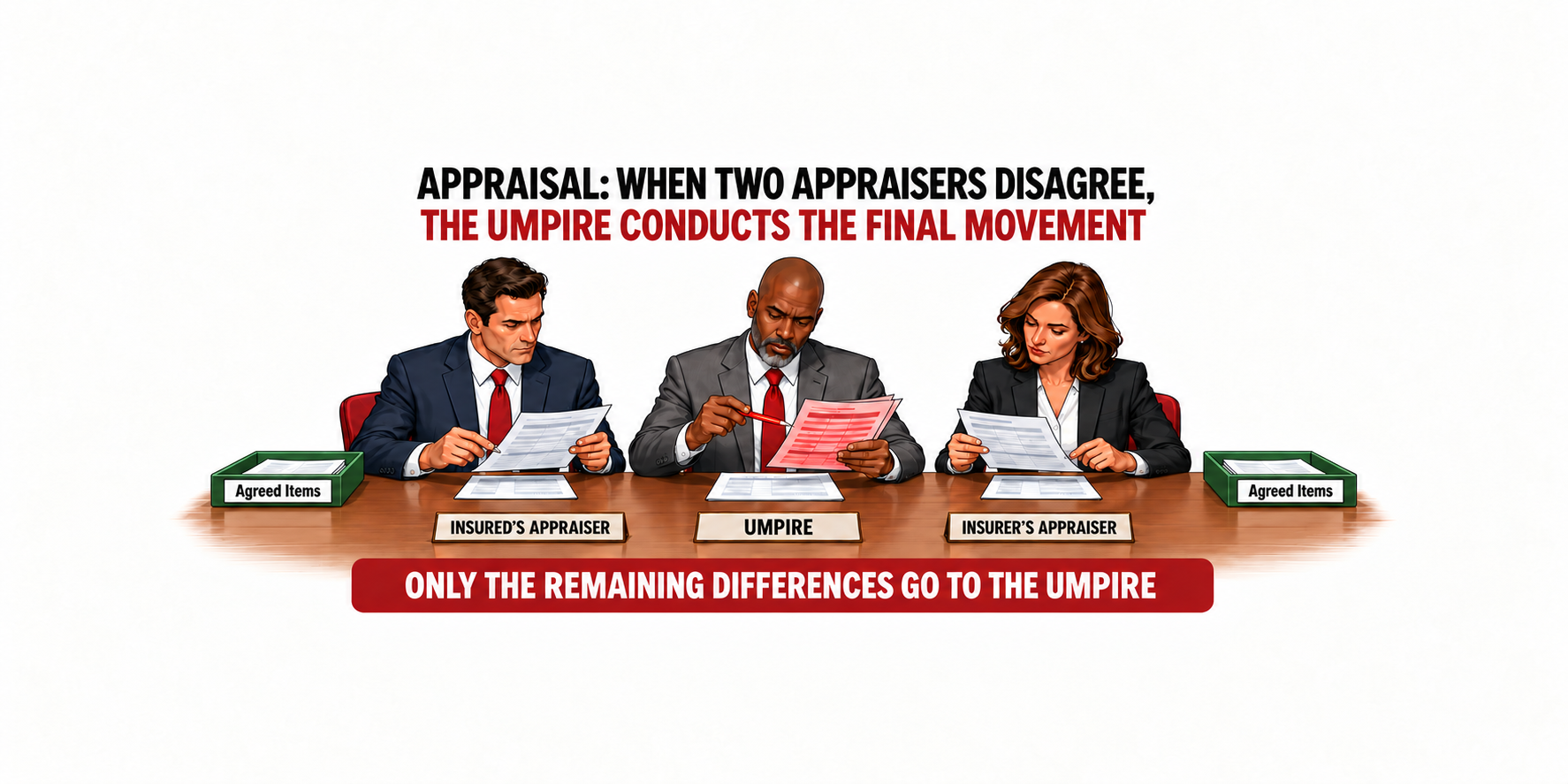
Appraisal: When Two Appraisers Disagree, the Umpire Conducts the Final Movement
Appraisal is built like a small orchestra: two appraisers who each play their part, and an umpire who steps in only where the parts don't agree. Here is who does what, why the panel needs the whole policy and not just the appraisal clause, and what to have ready before it starts.
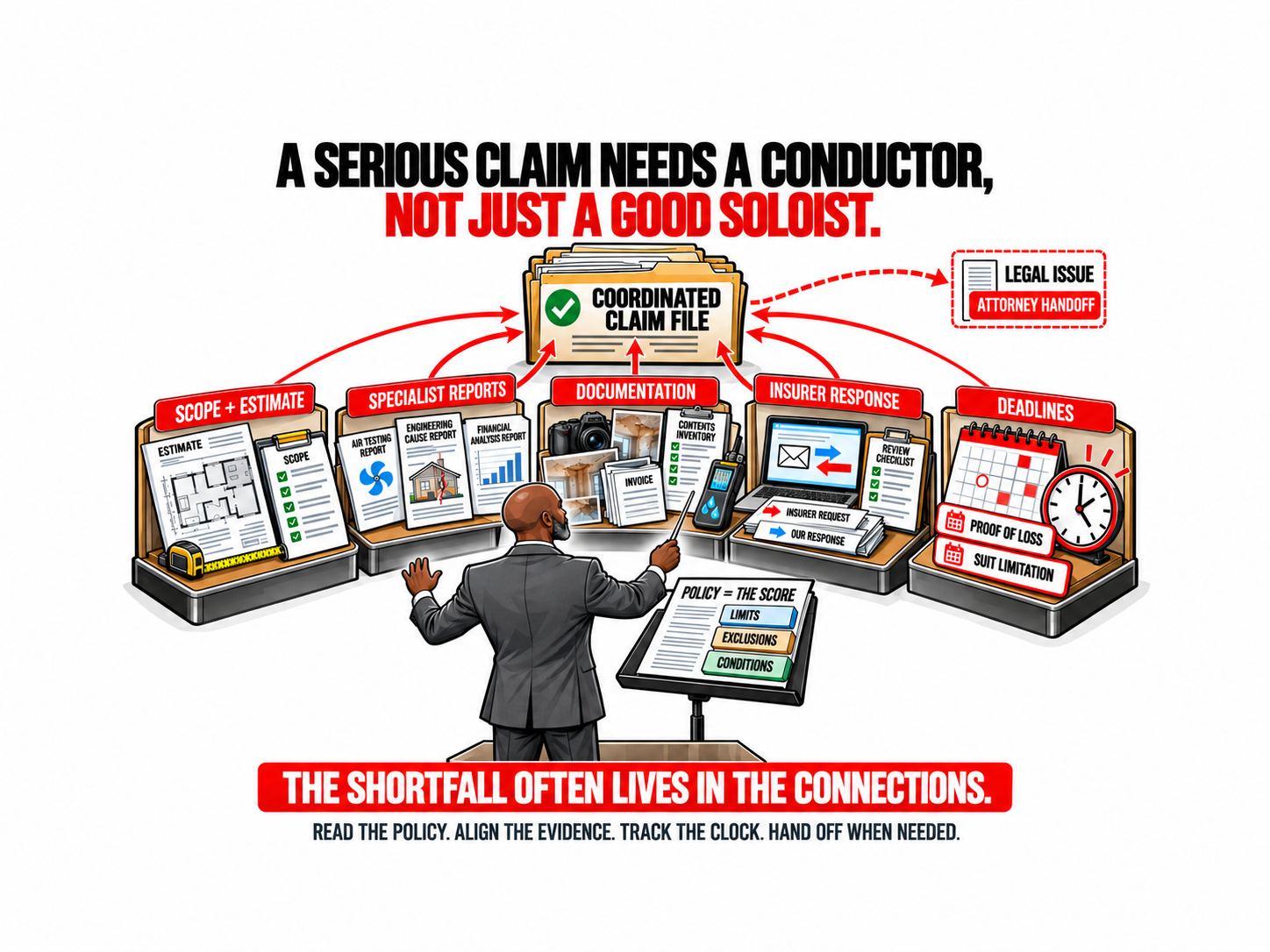
A Serious Claim Needs a Conductor, Not Just a Good Soloist
A strong estimate, good experts, and thorough documentation can still add up to a weak claim if nobody connects them. Serious losses need someone reading the policy, lining up the evidence, tracking the deadlines, and knowing when an attorney has to take over.
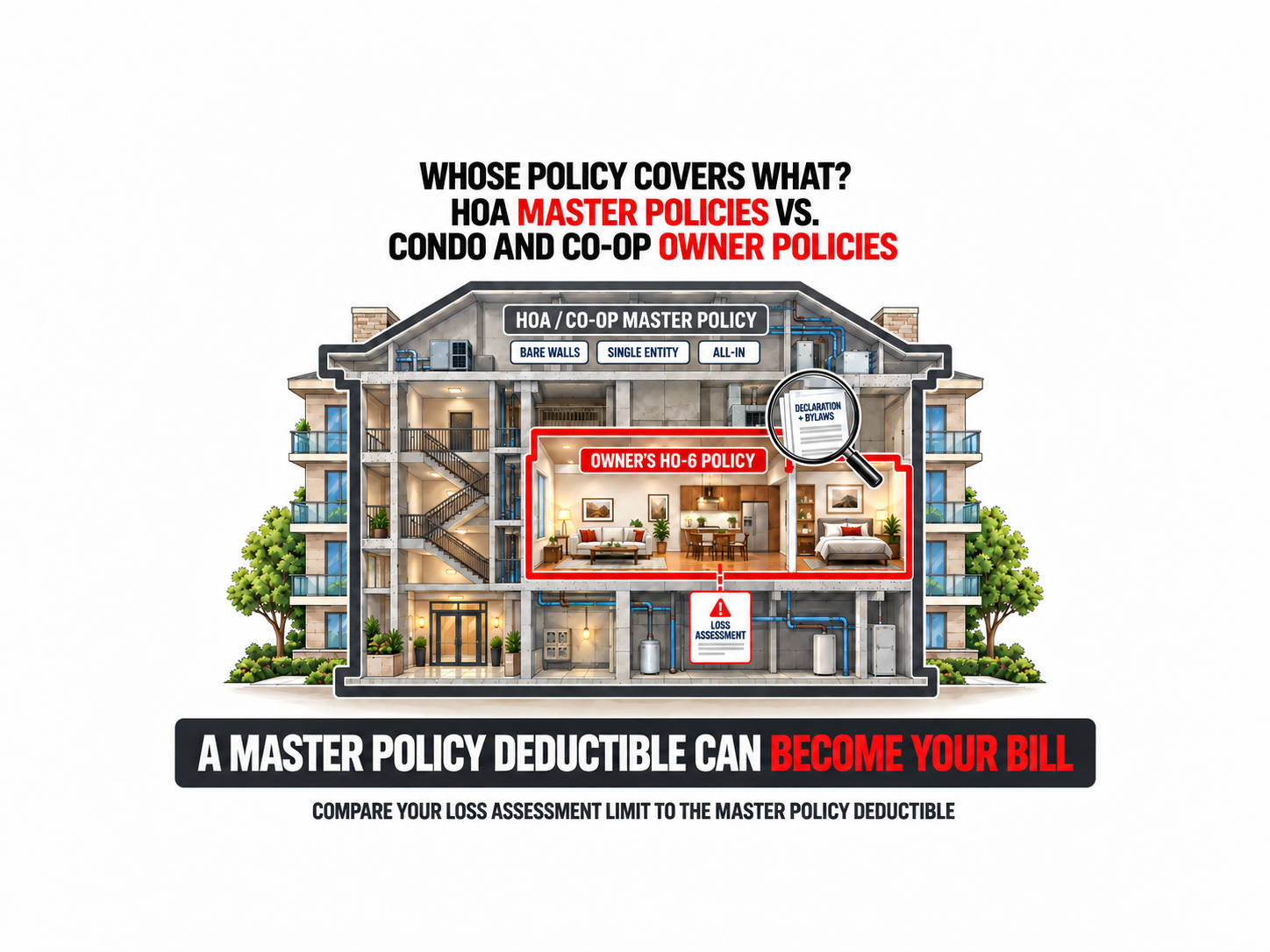
Whose Policy Covers What? HOA Master Policies vs. Condo and Co-op Owner Policies
Most condo and co-op owners assume the building's insurance has them covered. It doesn't — not entirely, and exactly how much it doesn't depends on a few words buried in your declarations page.
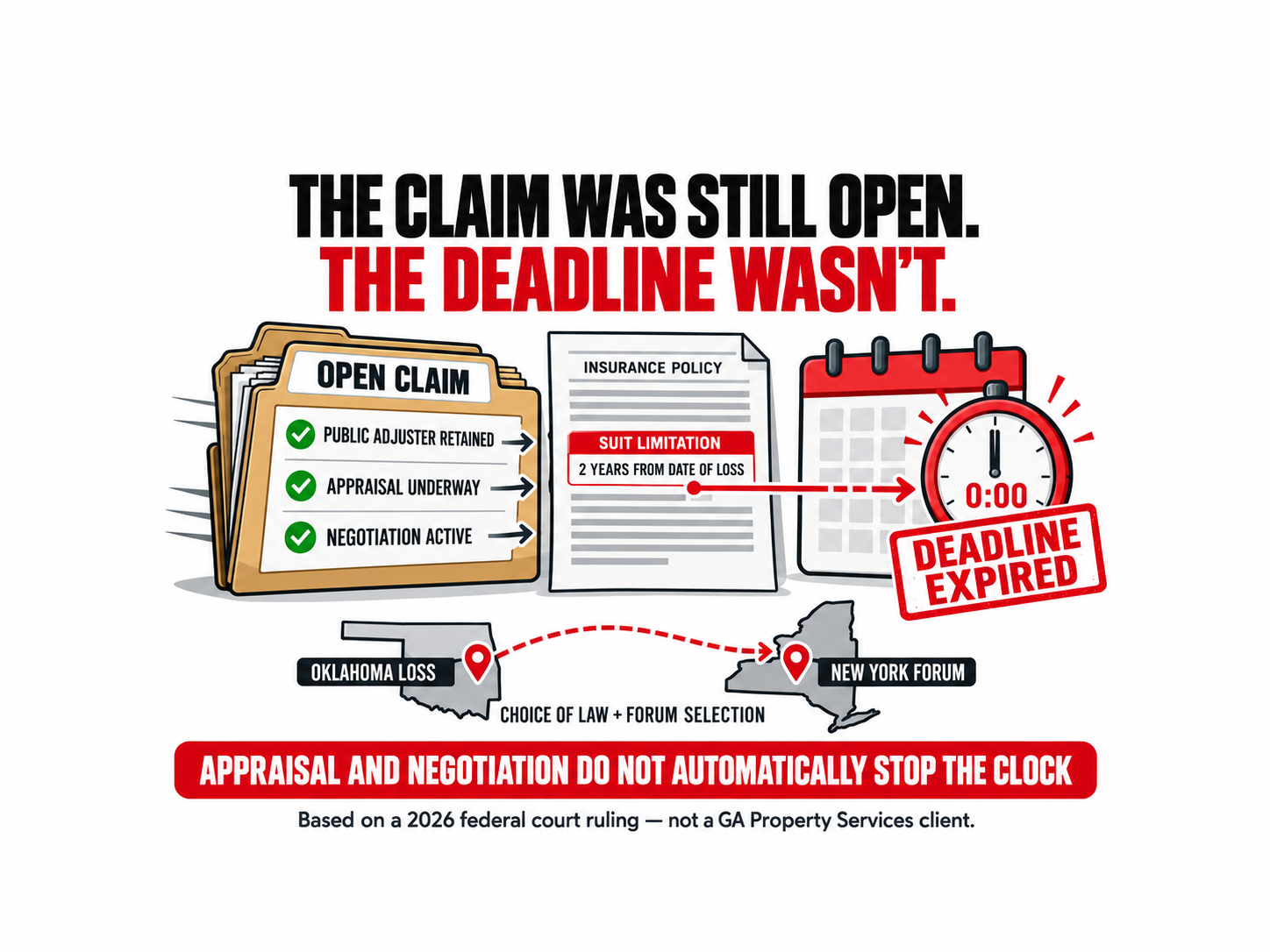
The Claim Was Still Open. The Deadline Wasn't.
A policyholder's claim was in appraisal, being actively negotiated, when the contractual deadline to sue quietly expired in the middle of it. A court dismissed the whole case. Here's the two-part lesson every policyholder needs from it.
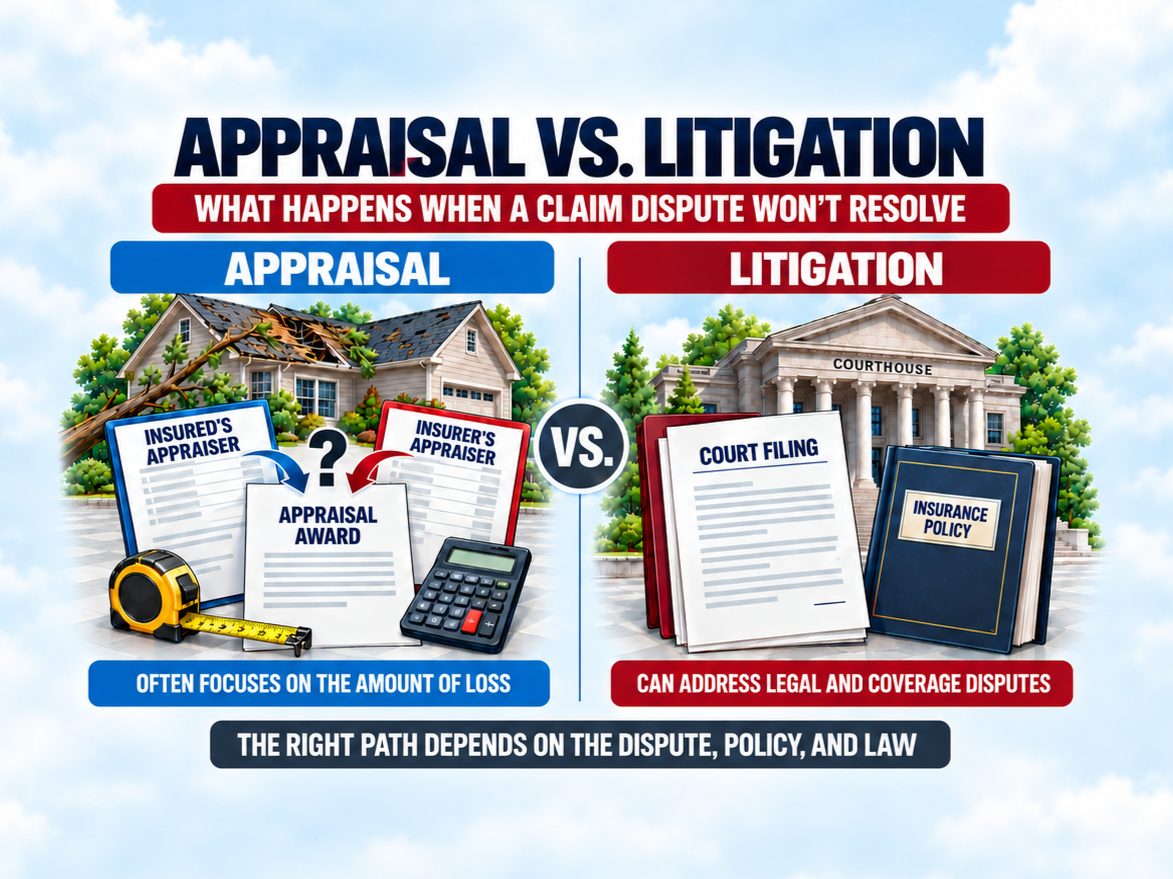
Appraisal vs. Litigation: What Happens When a Claim Dispute Won't Resolve
Appraisal vs. Litigation — "When a claim dispute won't resolve through negotiation, most policies offer a faster, cheaper path forward than most people expect. Here's how appraisal and litigation differ, and how to tell which one fits your dispute."
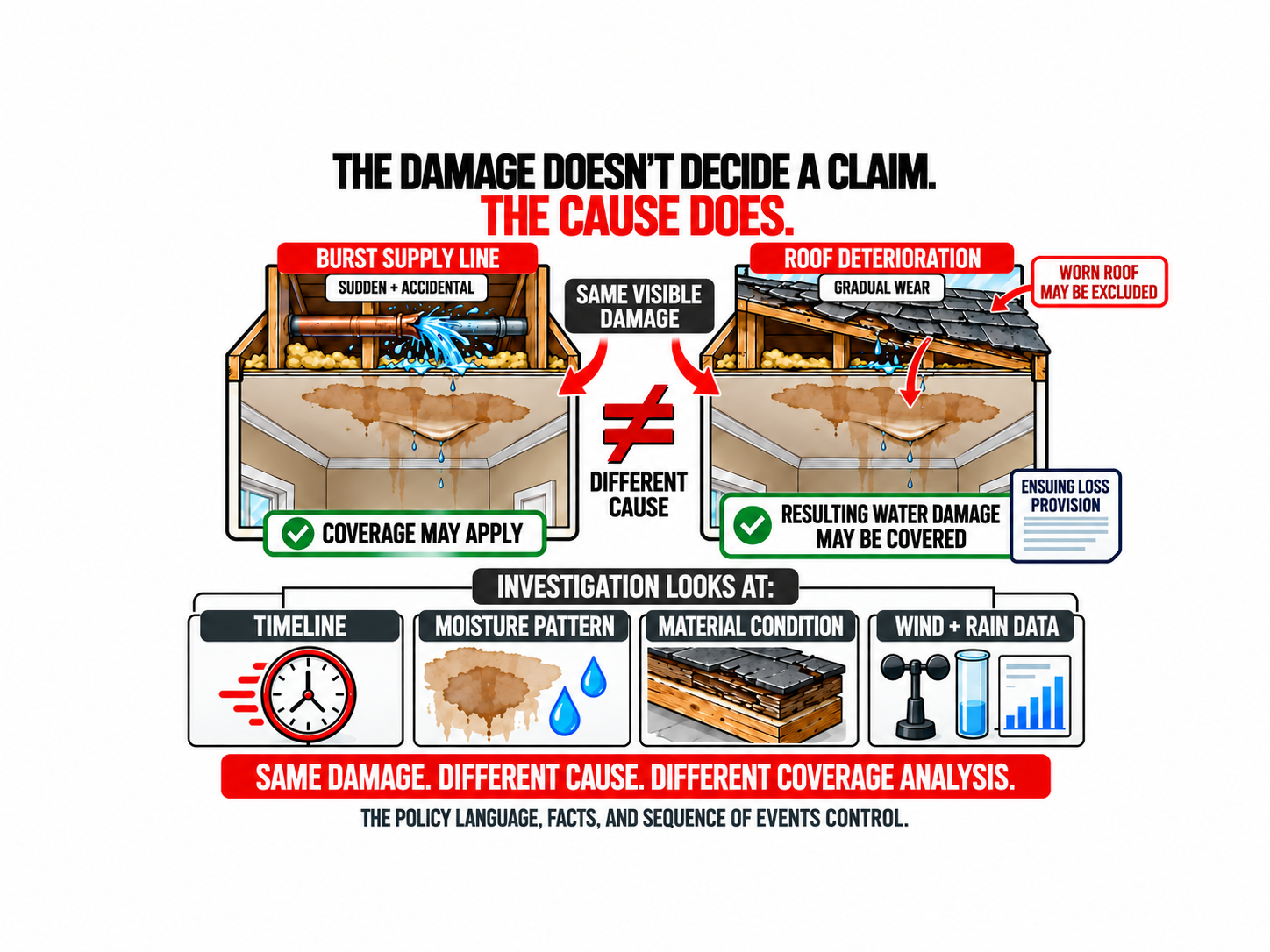
The Damage Doesn't Decide a Claim. The Cause Does.
Coverage almost never turns on whether damage exists, it turns on what caused it. The same water stain can be covered or excluded depending on the answer. Here's what investigating causation actually looks like, and why it's where claims quietly get denied.
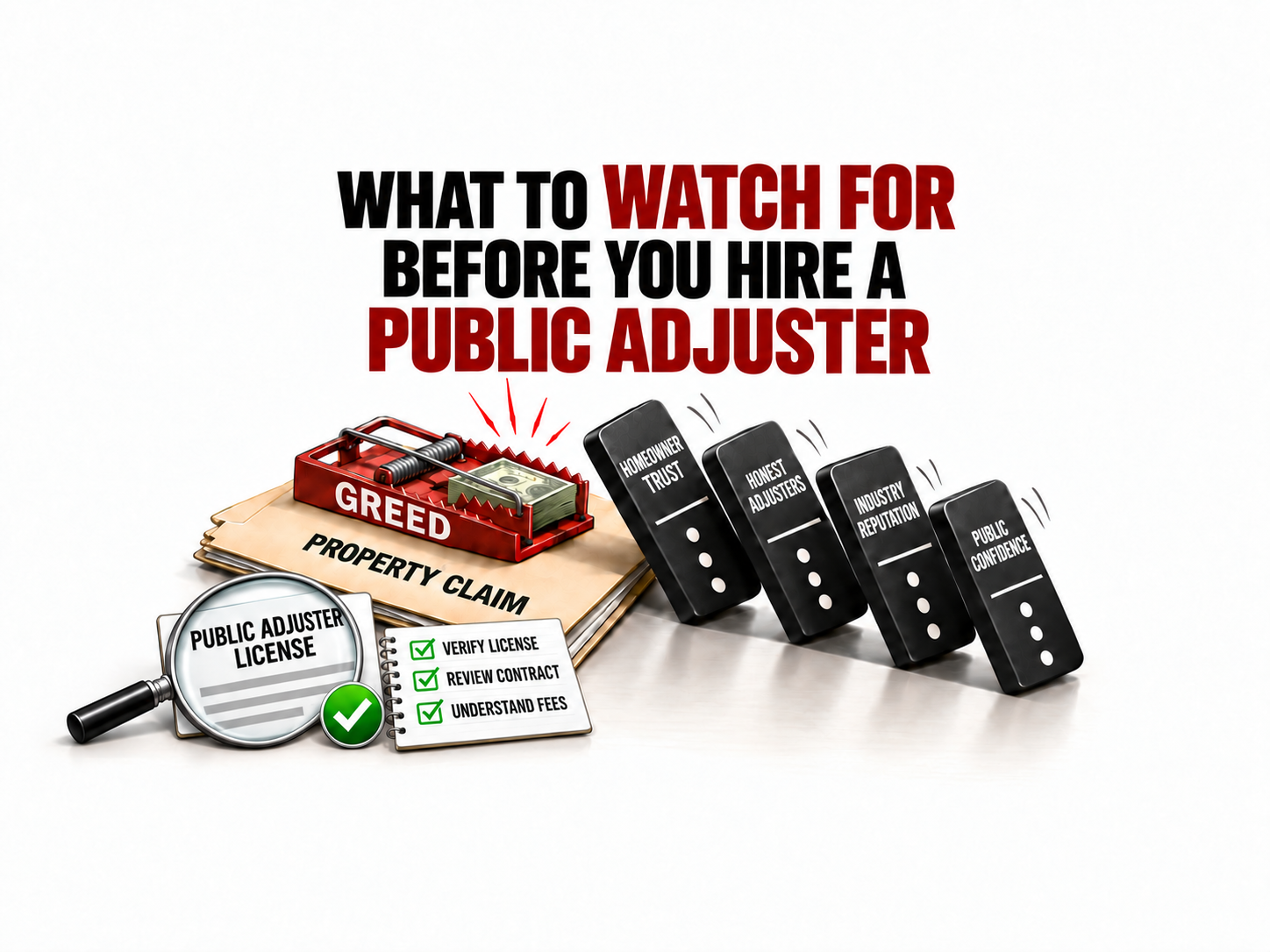
The Trap of Greed: What to Watch For Before You Hire a Public Adjuster
One bad experience with an adjuster who put his own payday first can convince a policyholder — and everyone they tell — that public adjusters are no different than the insurance companies we're hired to stand against.
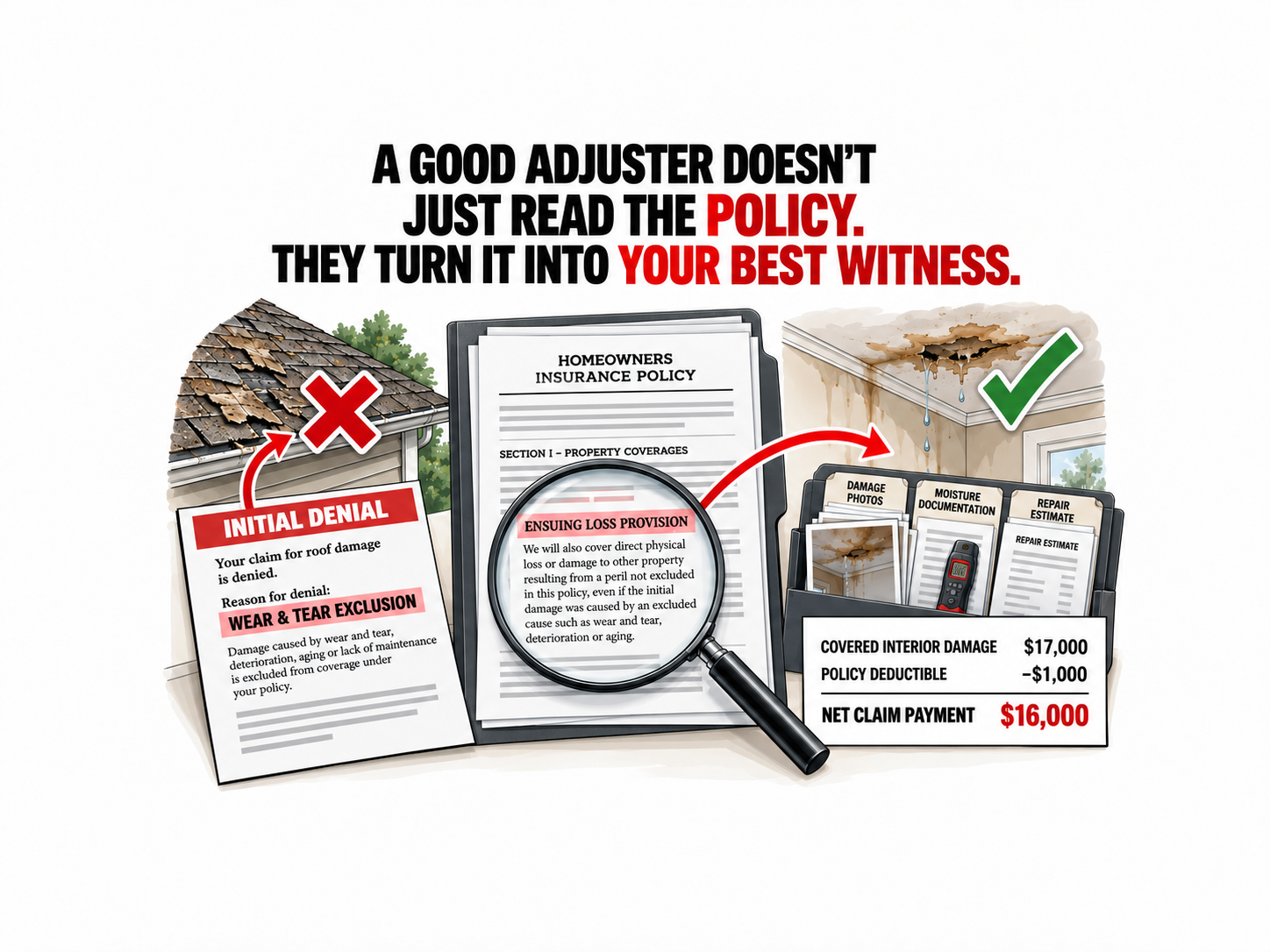
A Good Adjuster Doesn't Just Read the Policy. They Turn It Into Your Best Witness.
The Policy Can Be Your Best Witness: A denied claim and an approved one can come from the exact same page of the same policy, the only difference is which paragraph got read, and how carefully. Here's how a thorough adjuster turns the insurer's own contract into the strongest evidence behind a claim.
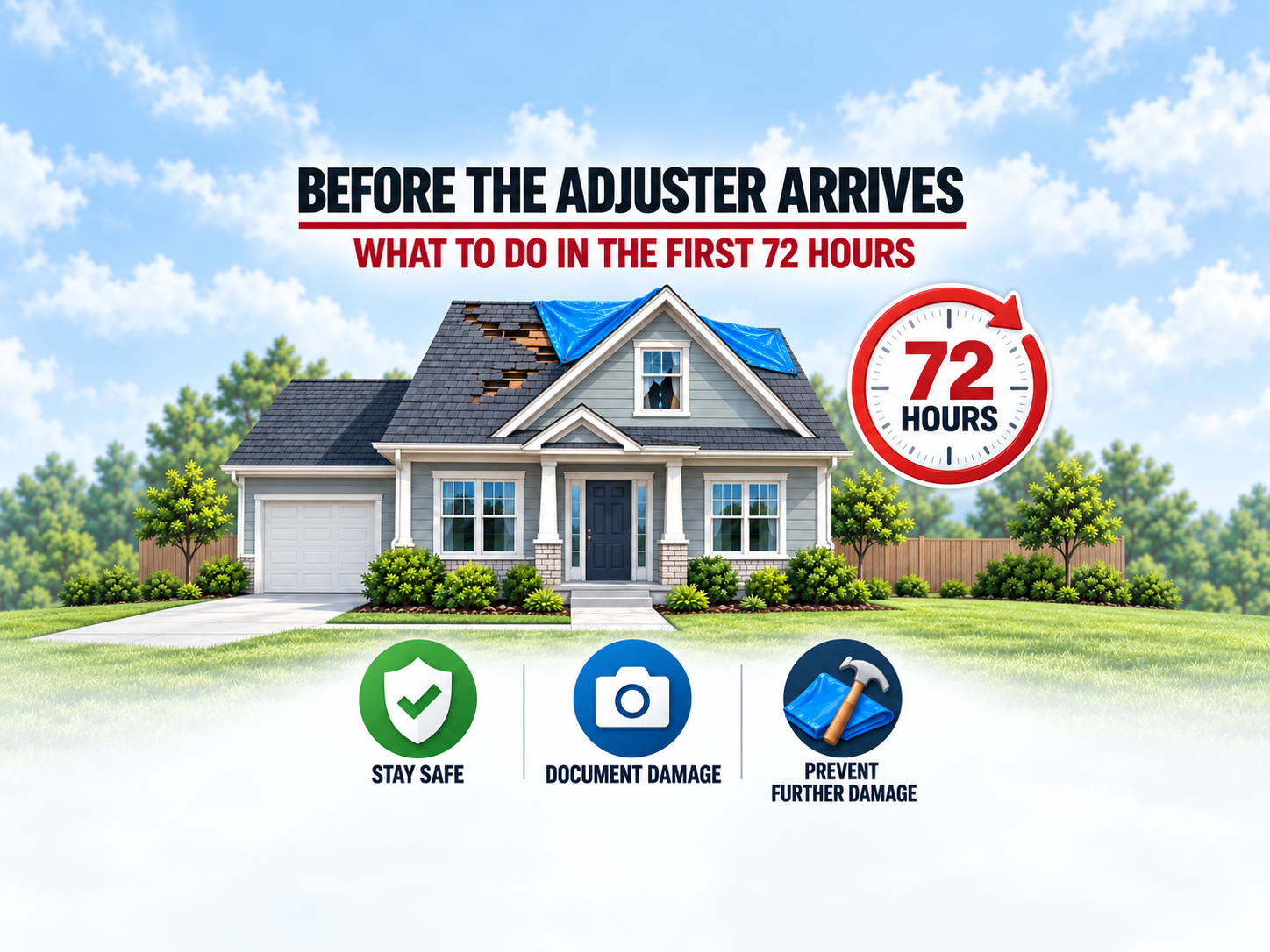
Before the Adjuster Arrives: What to Do in the First 72 Hours
Before the Adjuster Arrives — "The first 72 hours after a fire, storm, or water loss shape the rest of your claim, often before you've had time to think clearly. Here's what to document, what to avoid, and what not to sign before the adjuster shows up."
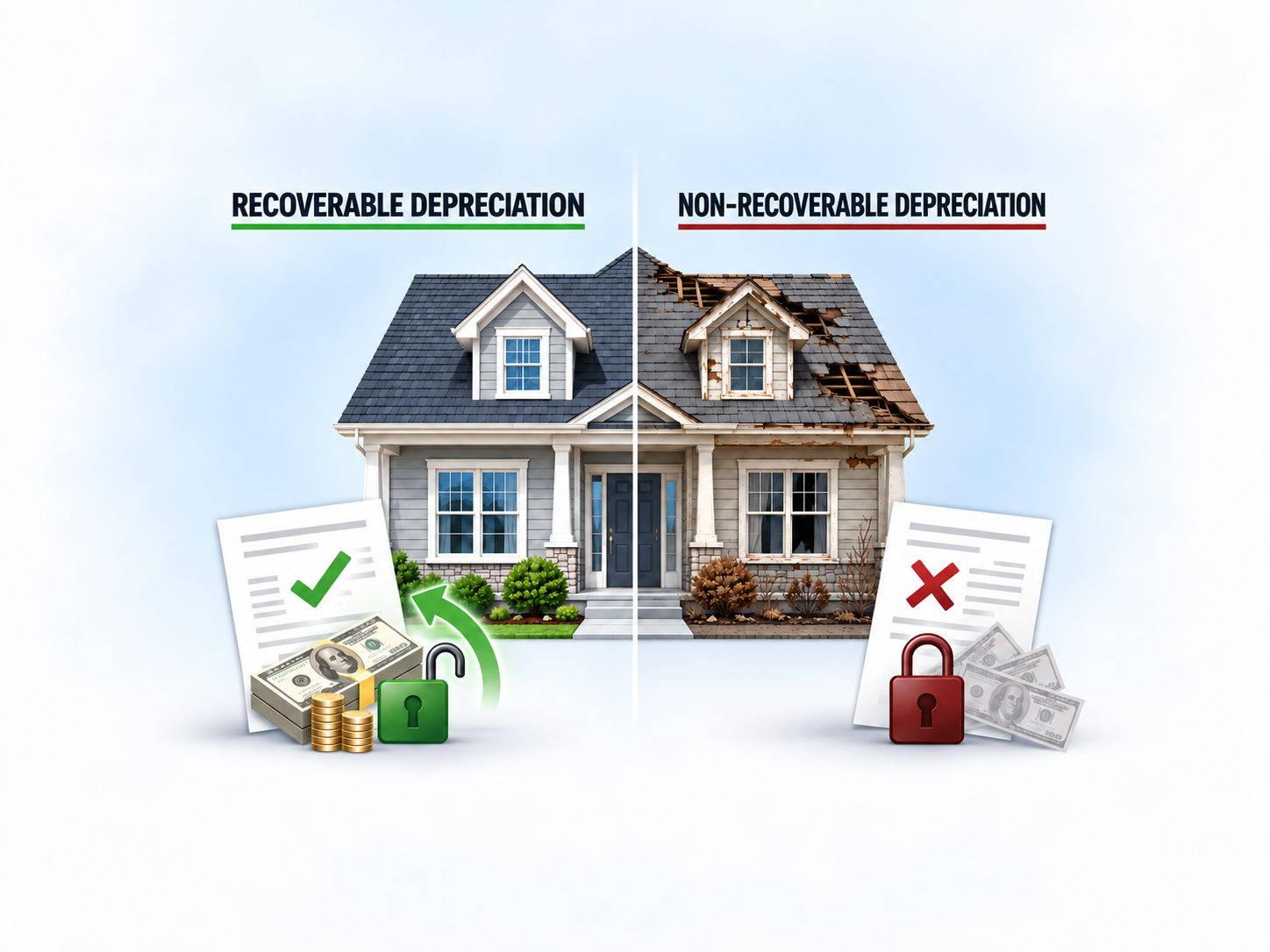
Recoverable vs. Non-Recoverable Depreciation: The Money You Might Be Leaving on the Table
Recoverable vs. Non-Recoverable Depreciation — "Some of the money withheld from your first claim check isn't gone for good — it's waiting for you to ask for it. Here's the difference between recoverable and non-recoverable depreciation, and the deadline that can make you lose it."
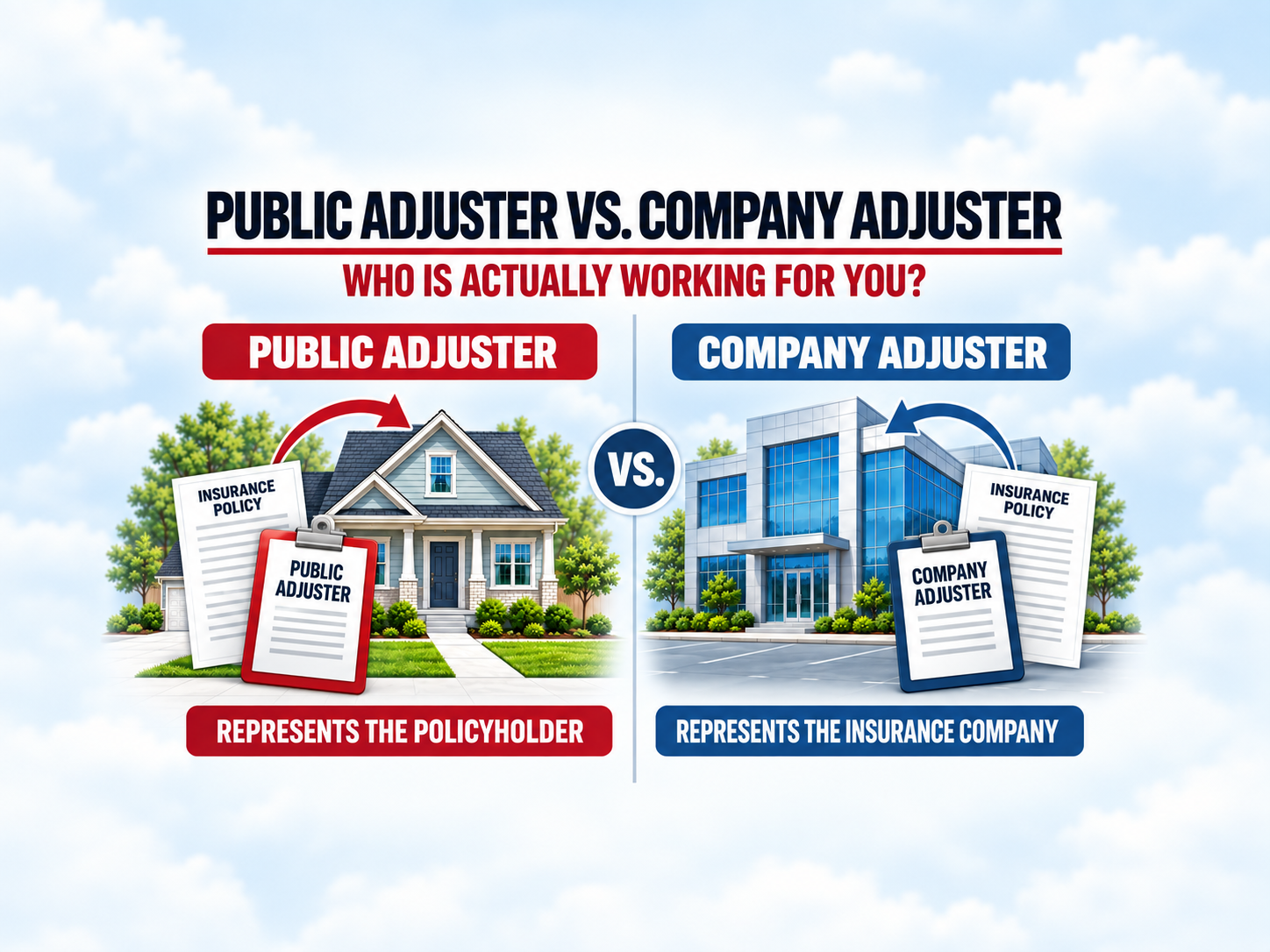
Public Adjuster vs. Company Adjuster: Who Is Actually Working for You?
Public Adjuster vs. Company Adjuster — "When an insurance adjuster inspects your property, it's natural to assume they're neutral. They're not — and knowing the difference between the adjuster your insurer sends and a public adjuster you hire yourself can be worth thousands on your claim."
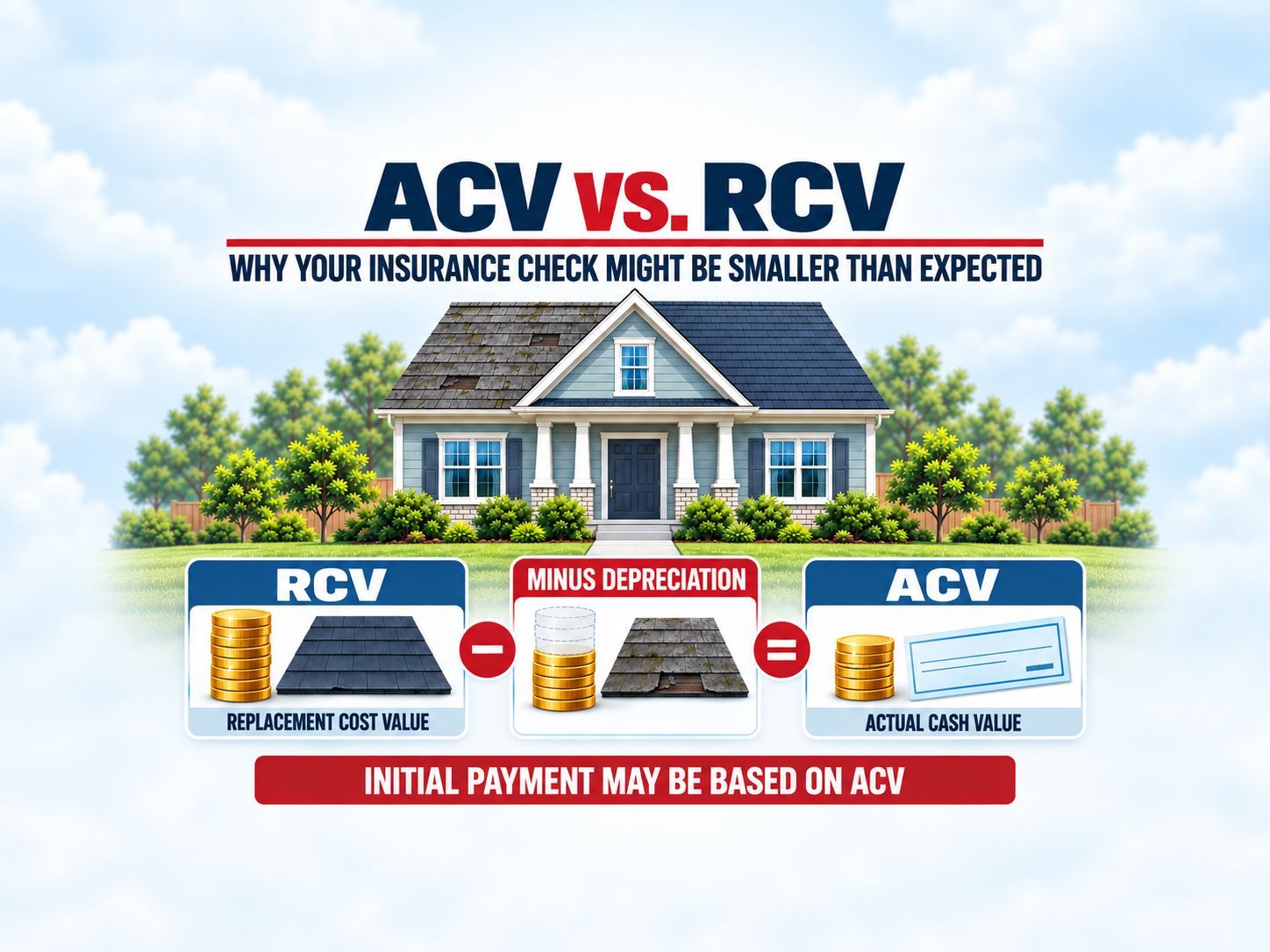
ACV vs. RCV: Why Your Insurance Check Might Be Smaller Than You Expected
ACV vs. RCV — "If your settlement check came back smaller than the repair estimate, the gap usually comes down to two terms buried in your policy. Here's what Actual Cash Value and Replacement Cost Value actually mean for your payout."
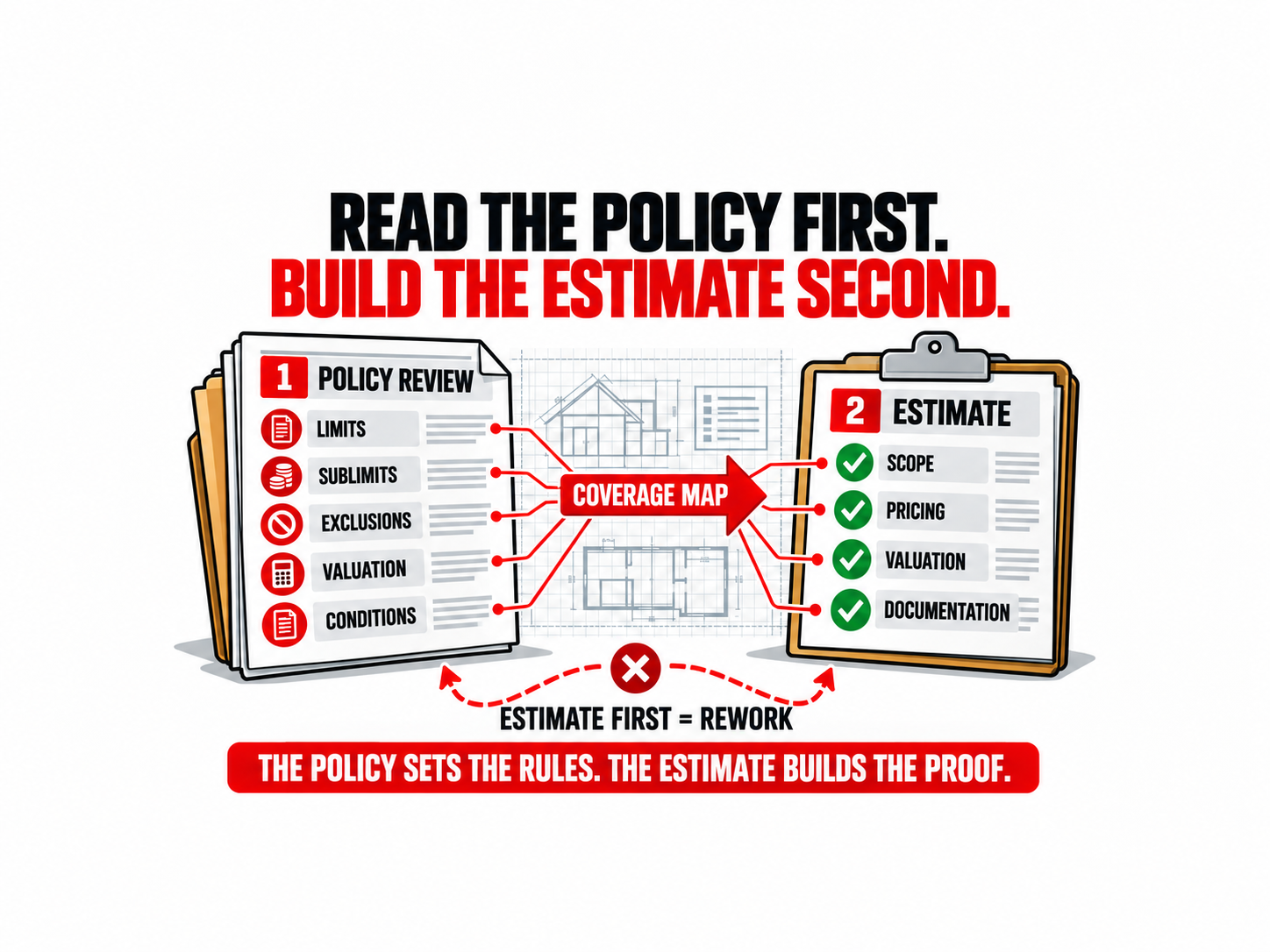
Read the Policy First. Build the Estimate Second.
Building the estimate before reading the policy means rewriting it later and defending line items that were never covered to begin with. Read the policy first, and the estimate becomes something the insurer can't easily pick apart.
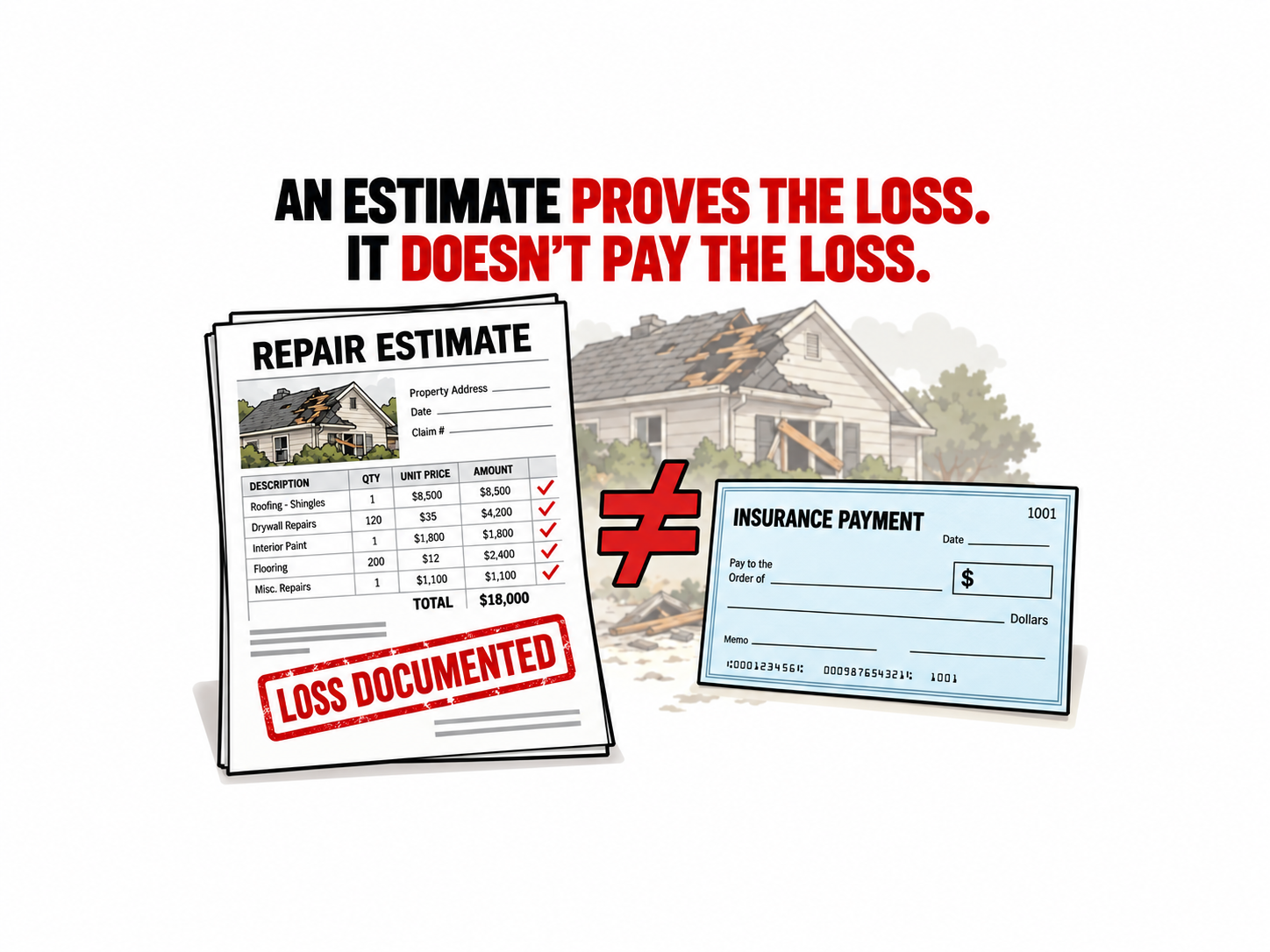
An Estimate Proves the Loss. It Doesn't Pay the Loss.
An Estimate Proves the Loss. It Doesn't Pay the Loss. — "A documented estimate can feel like the hard part of a claim is behind you. It isn't — proving a loss and getting paid for it are two separate problems. Here's the difference, and where a public adjuster's actual work actually begins."
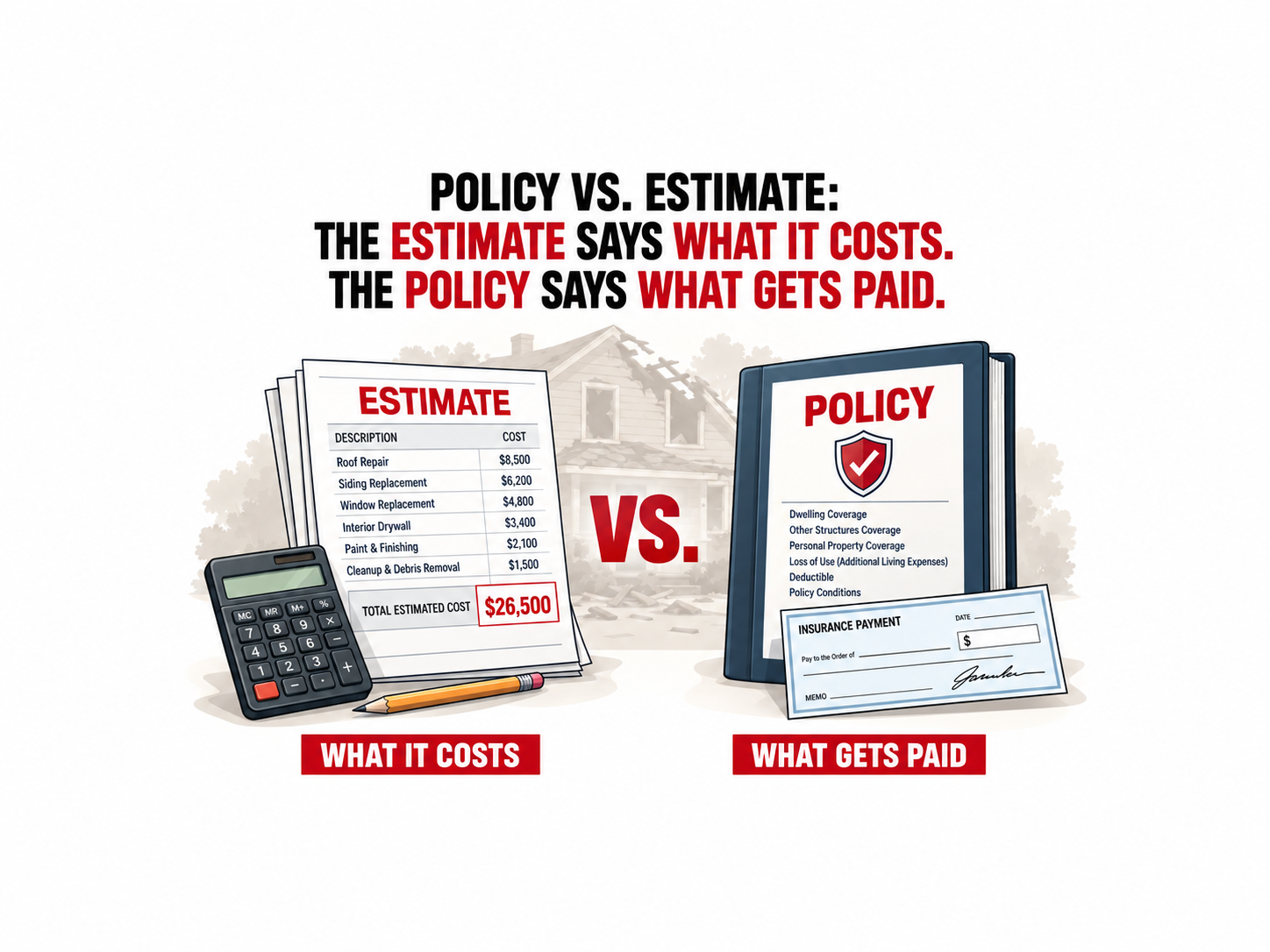
Policy vs. Estimate: The Estimate Says What It Costs. The Policy Says What Gets Paid.
Policy vs. Estimate: The Estimate Says What It Costs. The Policy Says What Gets Paid. — "A big, accurate estimate doesn't guarantee a big payout — the policy decides what's actually possible to pay before anyone even starts negotiating. Here's how limits, sublimits, and exclusions quietly shape a claim's real ceiling."
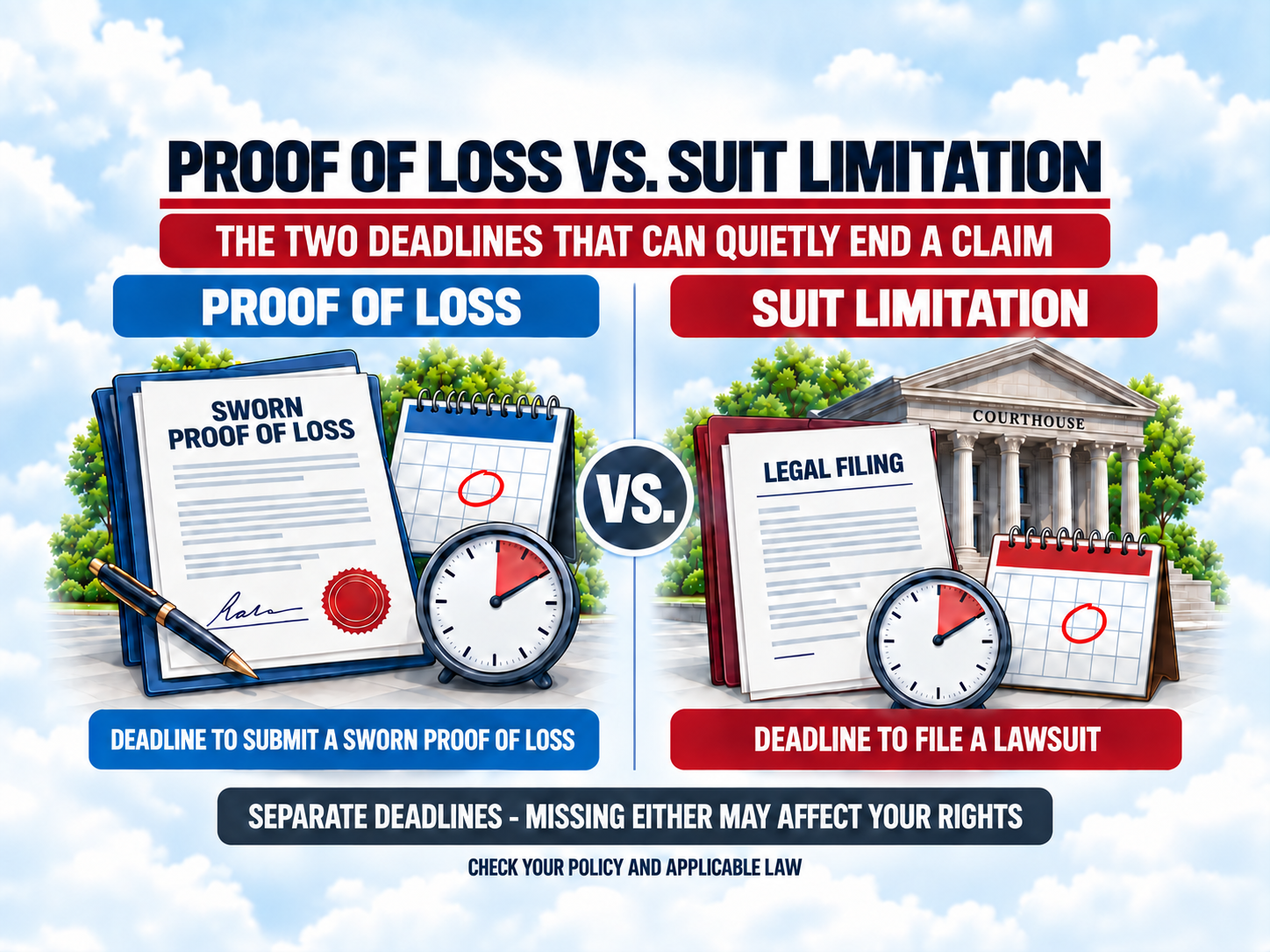
Proof of Loss vs. Suit Limitation: The Two Deadlines That Can Quietly End a Claim
Proof of Loss vs. Suit Limitation — "Two separate clocks run on every property claim, and missing either one can bar a legitimate claim regardless of its value. Here's what these deadlines mean, and how they differ by state."
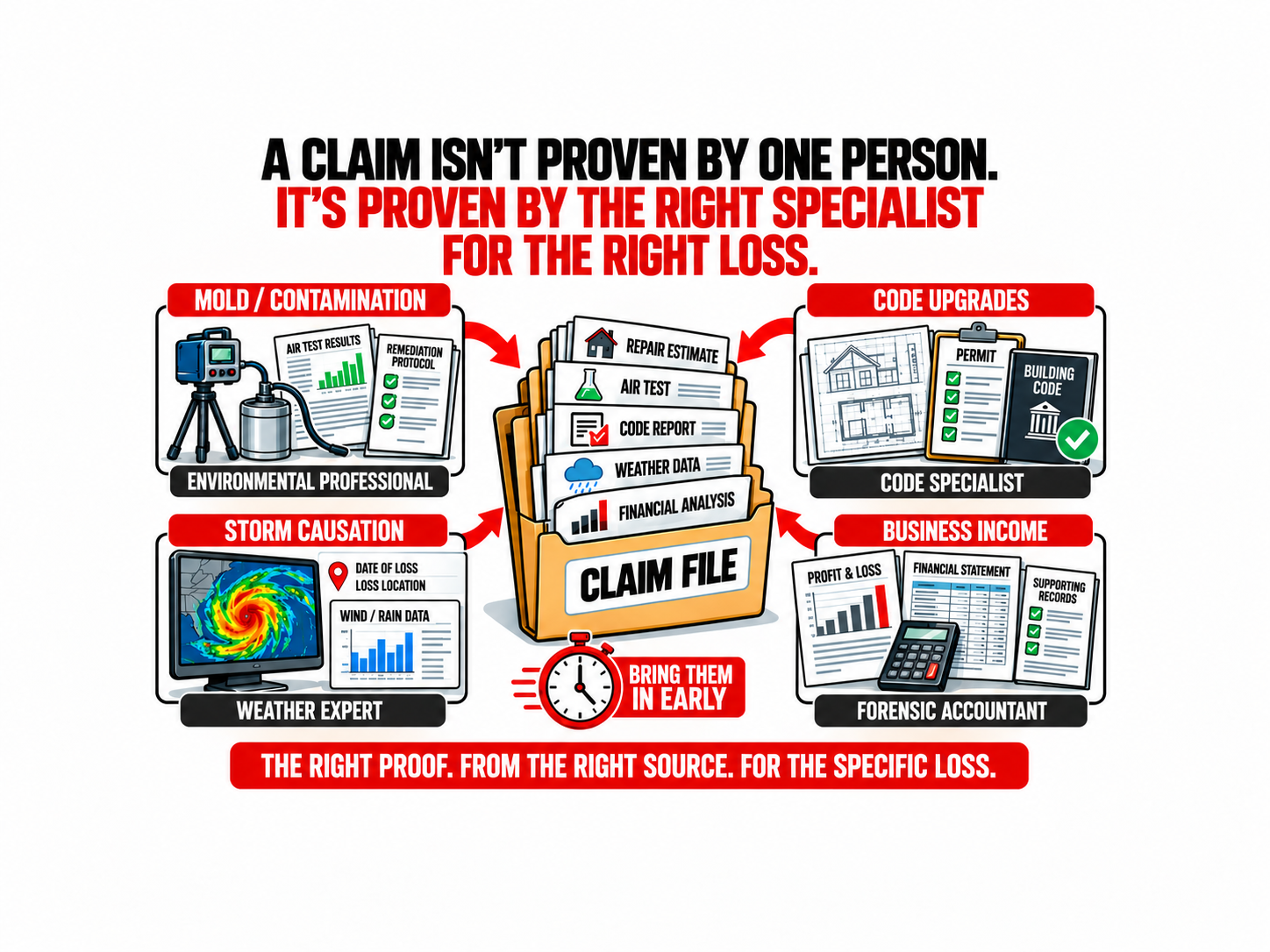
A Claim Isn't Proven by One Person. It's Proven by the Right Specialist for the Right Loss.
A repair estimate proves what it costs to fix visible damage, it isn't built to prove mold contamination, code-upgrade requirements, or a business income loss. Here's why the strongest claims often need more than one kind of expertise.
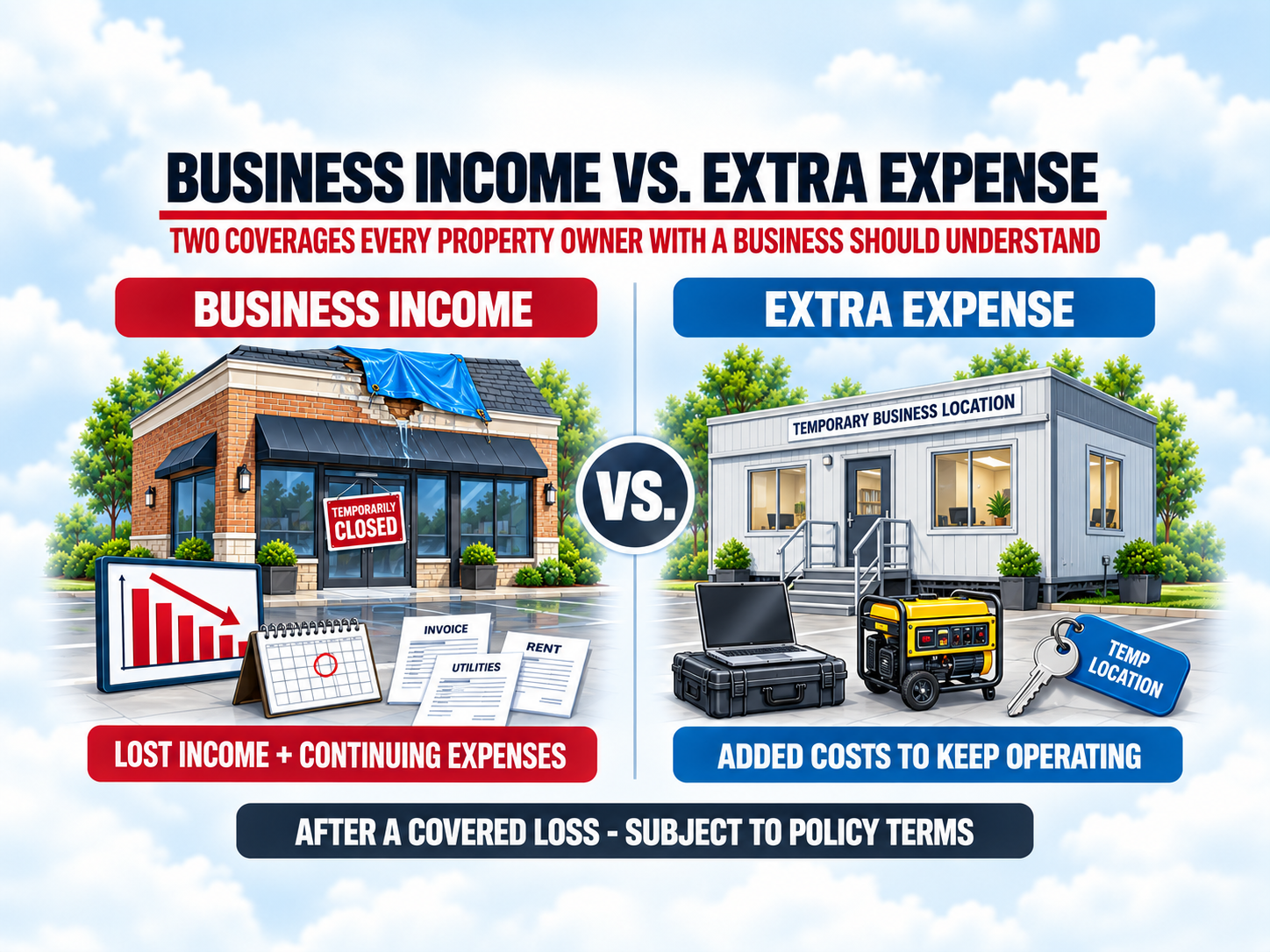
Business Income vs. Extra Expense: Two Coverages Every Property Owner With a Business Should Understand
Business Income vs. Extra Expense — "A commercial property loss doesn't just damage a building, it interrupts a business. Two separate, overlapping coverages respond to that lost income and the extra cost of staying open. Here's how they work together."
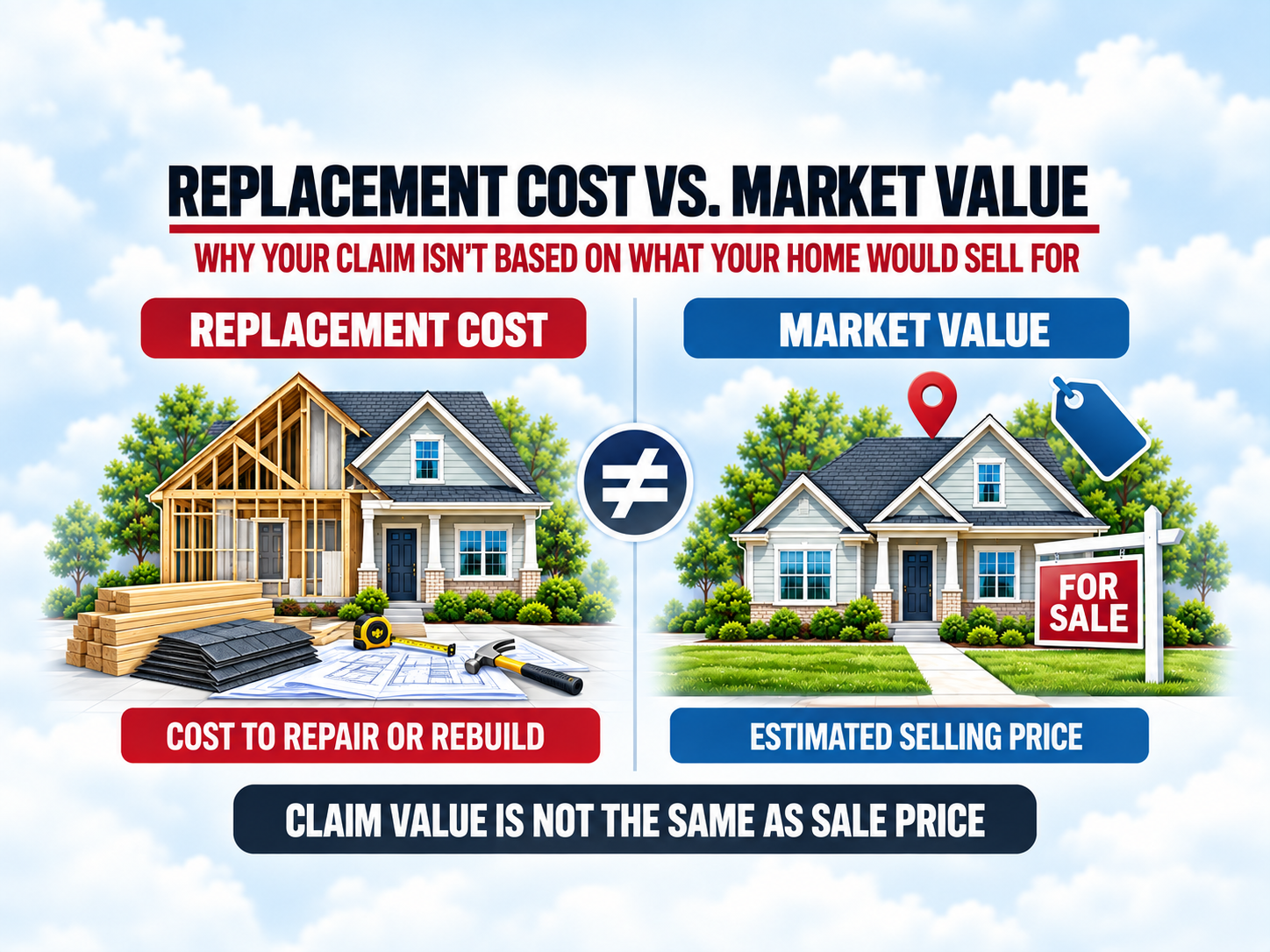
Replacement Cost vs. Market Value: Why Your Claim Isn't Based on What Your Home Would Sell For
Replacement Cost vs. Market Value — ""My house isn't even worth that much" is a common reaction to a repair estimate, and it comes from comparing two numbers that measure completely different things. Here's why your claim is based on rebuild cost, not resale value."